Servers and Racks
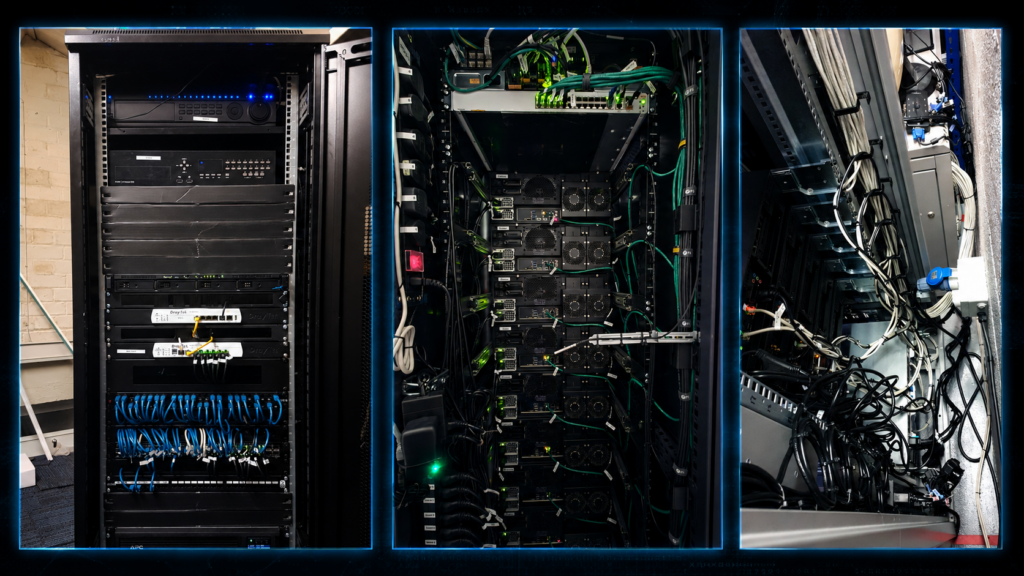
Over the years I have designed, built and maintained many server infrastructures, from simple 10U racks to complete 50U installations. The work has covered 1U, 2U, 4U and 6U servers, JBOD systems, CPU/GPU workstations, high-performance servers and machines designed for specific workloads, including demanding rendering, simulation, storage and low-latency environments.
A key part of my work has always been thinking beyond “plug everything in and close the door”. I like designing racks that can actually be maintained: organised cabling, considered airflow, well-distributed power and servers that can be pulled out for maintenance without turning the rack into a mess of cables. In some cases, that was exactly the goal: allowing a live server to be pulled forward, with the cables following the movement cleanly without getting caught.
I have also worked on infrastructure connected to professional studios, machine rental services, security systems, PBX, specialised workstations and technical platforms where stability, maintainability and physical organisation make all the difference.
Networks
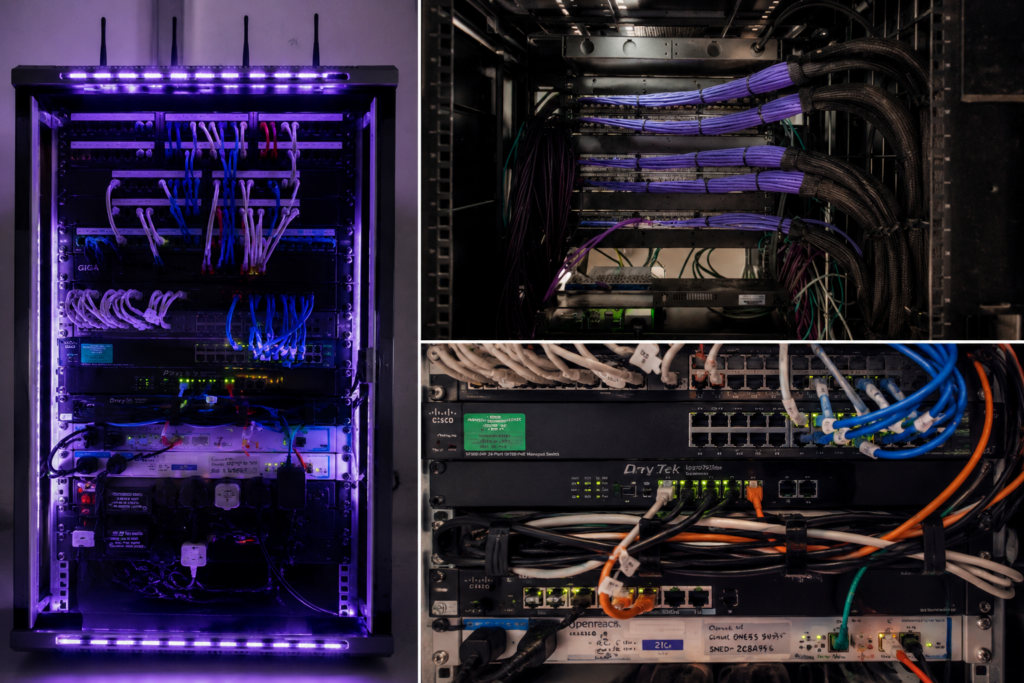
The networking side naturally goes hand in hand with server work. I have designed, reorganised and maintained networks for business environments, technical racks, small clients and internal systems, from simple setups to networks with multiple devices, VLANs, routers, switches, firewalls, remote access and technical documentation.
The focus is always the same: a network should be stable, understandable and easy to maintain. It is not enough for it to work on installation day; it needs to keep making sense months or years later, when someone needs to understand what is connected, where it is connected and why.
I have experience with networks for real working environments, from small businesses to more complex technical infrastructure, including integration with servers, security systems, remote access, VoIP/PBX, backups and internal services.
3D Prints
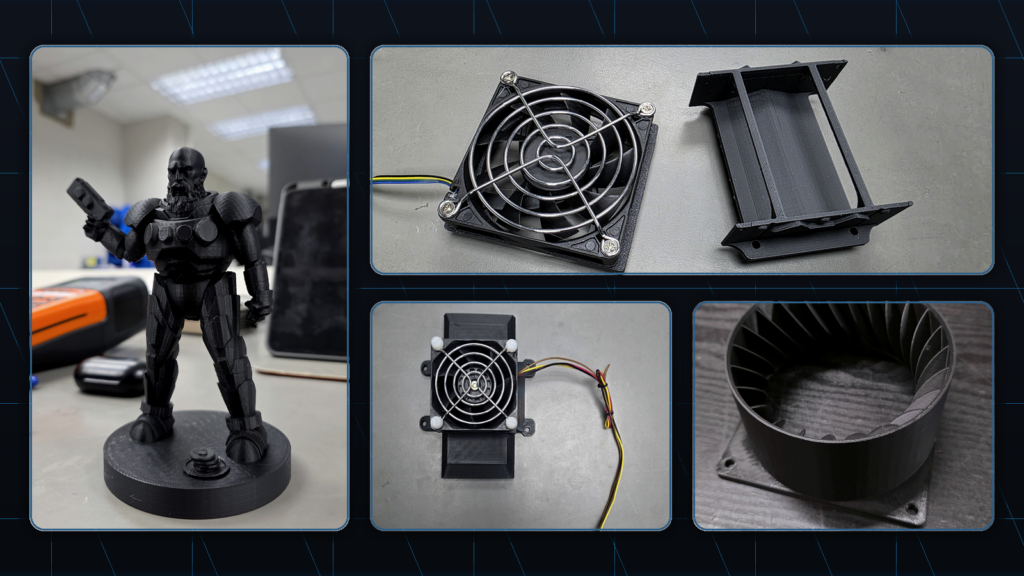
I use 3D printing as a practical engineering tool, not just as a hobby. I design parts in Fusion 360 and produce functional components for workstations, servers and technical systems, especially when a commercial part does not exist or does not solve the problem properly.
Projects I have developed include custom coolers for DDR5 RAM, airflow tunnels to direct air without side dispersion, GPU supports, front fan adapters, coolers for specific cards, heatsinks and heat extractors for GPUs, NVMe adapters and other custom technical parts.
One of the most important examples was developing a quiet cooling solution for DDR5 RAM in high-performance workstations, preventing the modules from hitting thermal limits and reducing their frequency. The part was designed to work efficiently, simply and quietly, without relying on improvised or overly noisy solutions.
I work with several materials depending on the needs of the part, including PLA, PETG, ASA, TPU, PC-CF, PA6-CF and PLA UL94 V-0, choosing the material according to strength, temperature, flexibility, finish and safety.
Custom Programs
I have also developed several internal tools and custom programs, always with the aim of solving concrete problems.
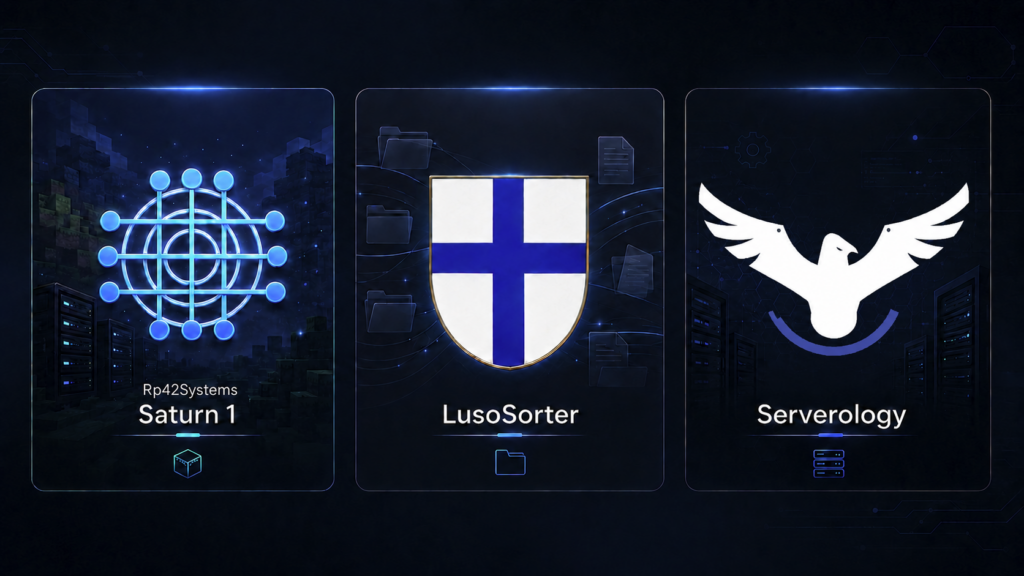
The first major project was Saturn I, created between 2010 and 2014 to manage Minecraft servers during a period when I ran a large server network. It was a tool built to automate management, control and operation, at a time when a lot still had to be built by hand.
In 2016 I developed an automated file organisation system, designed to separate, move and structure data in a smarter way. It was an internal project, simple in concept, but useful for automating repetitive tasks and reducing manual work.
Later, in 2021, Serverology was born: a server automation and management platform originally created in PowerShell and later expanded with Python. It was developed to manage the technical operation of RipperRentals and still plays an important role in automation, organisation and system control.
For me, custom software does not need to look beautiful on the outside to have value. It needs to solve the right problem, reduce errors, save time and make complex systems easier to control.